Currently Empty: $0.00
10 Essential Skid Steer Maintenance Tips Every Operator Should Know
Starting a busy construction day, a skid steer may look ready to work after starting normally and passing a quick visual check. Under the surface, however, small problems can develop long before they stop the machine. A hydraulic hose may rub against a nearby component, a fitting can begin to loosen, or fluid levels may gradually drop. Without regular attention, these minor issues can eventually turn into a breakdown during loading, grading, or attachment work.
Regular maintenance helps identify developing problems before they become unexpected downtime. Checking hydraulic hoses, fittings, fluids, tires or tracks, attachment connections, and other high-wear components gives operators a chance to address issues while they are still manageable. Short inspections may take only a few minutes, but they can prevent a small defect from becoming a much larger repair.
Under demanding working conditions, consistent care also helps keep the skid steer performing as intended. Following the manufacturer’s maintenance intervals, cleaning debris from critical areas, and monitoring changes in machine behavior can support reliable operation over time. A regular maintenance routine keeps potential problems visible and gives crews a better chance of fixing them before they interrupt the workday.
1. Check Engine Oil Regularly
Engine oil does the quiet, essential work of lubricating internal components while controlling friction and heat during operation. Run the engine low on oil, or on the wrong oil, and you invite wear that no other maintenance step can undo. It’s one of the simplest checks and one of the most important.
Check the oil level according to the manufacturer’s procedure and always use the specified oil type for your machine. Beyond the daily level check, follow the recommended service interval for oil and filter replacement, since oil breaks down and picks up contaminants over time. Staying on top of both keeps the engine protected across the long hours a skid steer works.
Key takeaway: Engine oil controls friction and heat, so check the level per the manufacturer’s procedure, use the specified oil, and follow the recommended oil and filter service interval.
2. Inspect Hydraulic Fluid
Hydraulic power is the muscle behind a skid steer, lifting the arms, working the bucket, and running many of the attachments that make the machine versatile. When the hydraulic fluid is in good condition, those functions stay smooth and responsive. When it isn’t, performance suffers across the board.
Check the hydraulic fluid level and look closely for signs of contamination or leaks. Cloudy or discolored fluid can point to trouble, and any leak deserves attention before it worsens. Maintaining the correct fluid level and condition is what supports consistent, dependable hydraulic performance shift after shift.
Key takeaway: Hydraulic fluid powers the lift arms, bucket, and attachments, so check the level and watch for contamination or leaks to support consistent hydraulic performance.
3. Clean the Cooling System
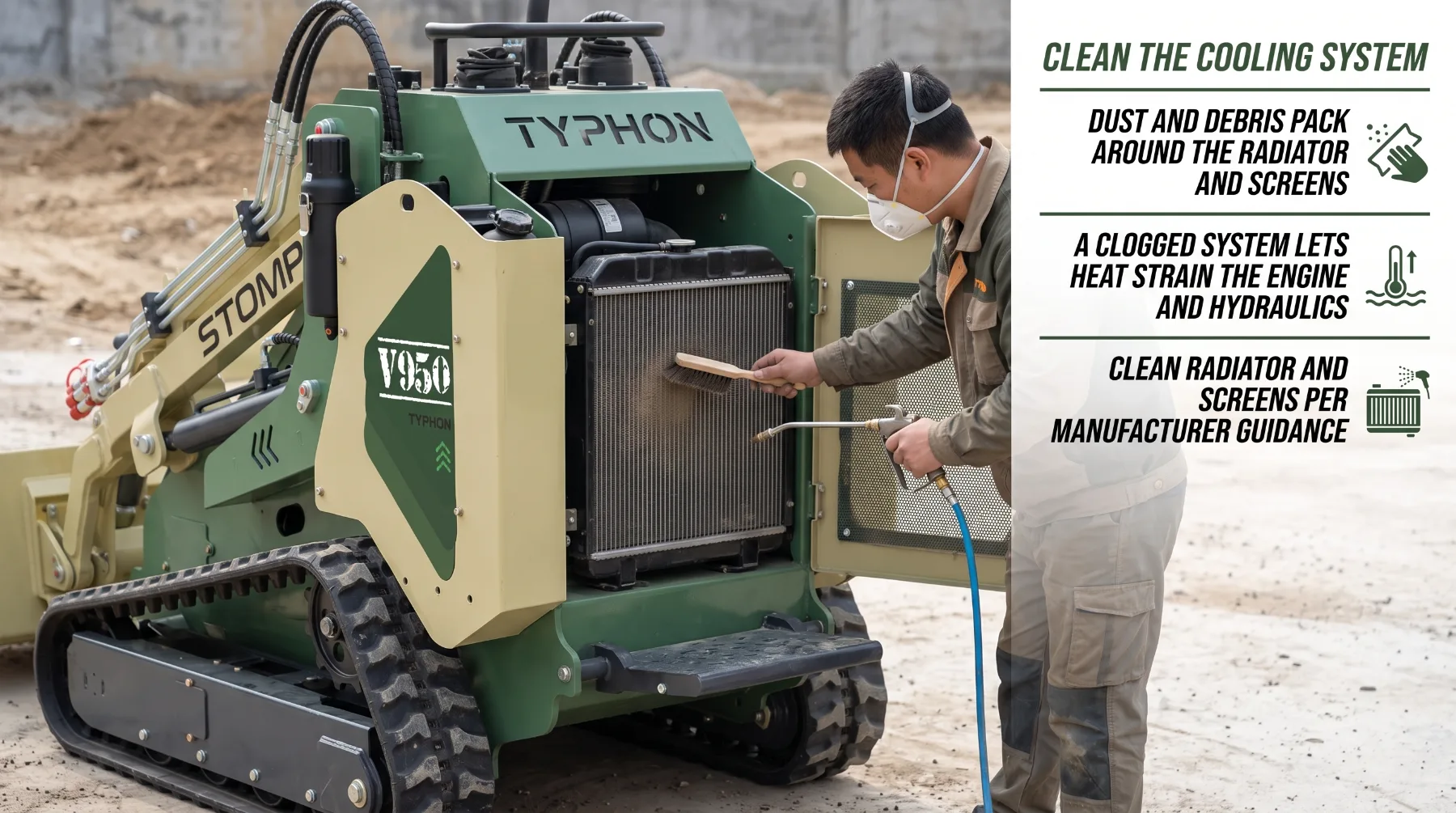
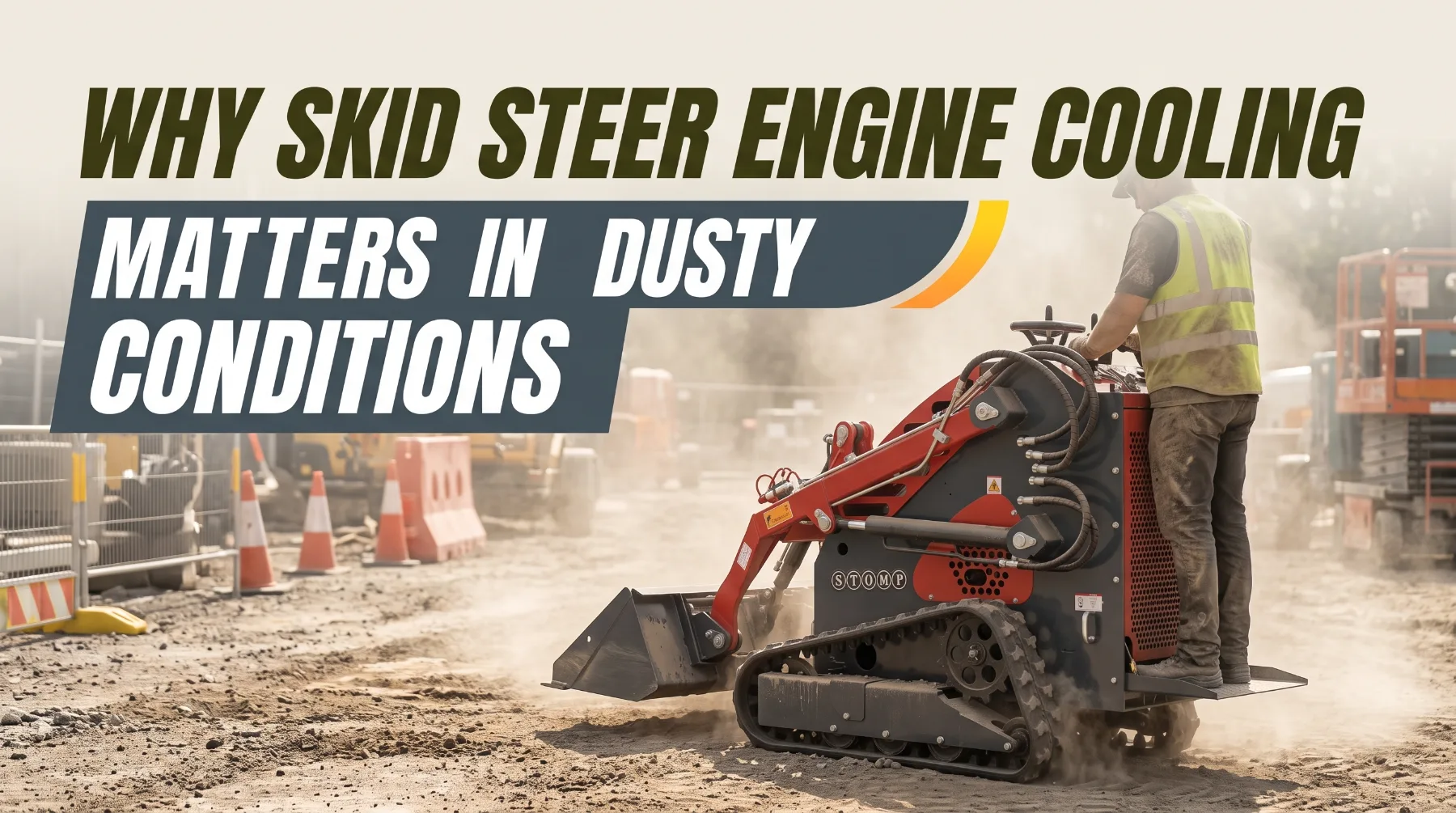
Dust, dirt, grass, and debris have a way of packing around the radiator and cooling screens, and every bit of buildup restricts the airflow the system depends on. A clogged cooling system lets heat climb, which strains both the engine and the hydraulics. On a dusty site, this happens faster than many operators expect.
Regularly inspect these areas and clean them according to the manufacturer’s recommendations. Keeping the radiator and screens clear preserves the airflow the machine needs to manage operating heat, which protects performance and helps avoid heat-related problems. It’s a quick check that pays off, especially in demanding conditions.
Key takeaway: Dust and debris around the radiator and cooling screens restrict airflow, so inspect and clean these areas regularly to help the engine and hydraulics manage heat.
4. Check Tires or Tracks
Whatever puts your skid steer in contact with the ground deserves a regular look, because traction and stability start there. For wheeled machines, inspect the tires for damage, excessive wear, and correct inflation where applicable. Underinflated or worn tires reduce grip and can affect how the machine handles.
Tracked skid steers call for their own checks: track condition, proper tension, and any visible damage. A track that’s too loose, too tight, or worn won’t perform the way it should. Whichever your machine runs on, sound ground-contact components support the traction and stability you rely on for safe, controlled work.
Key takeaway: Tires need checks for damage, wear, and inflation, while tracks need checks for condition, tension, and damage, since ground-contact components support traction and stability.
5. Inspect Hydraulic Hoses
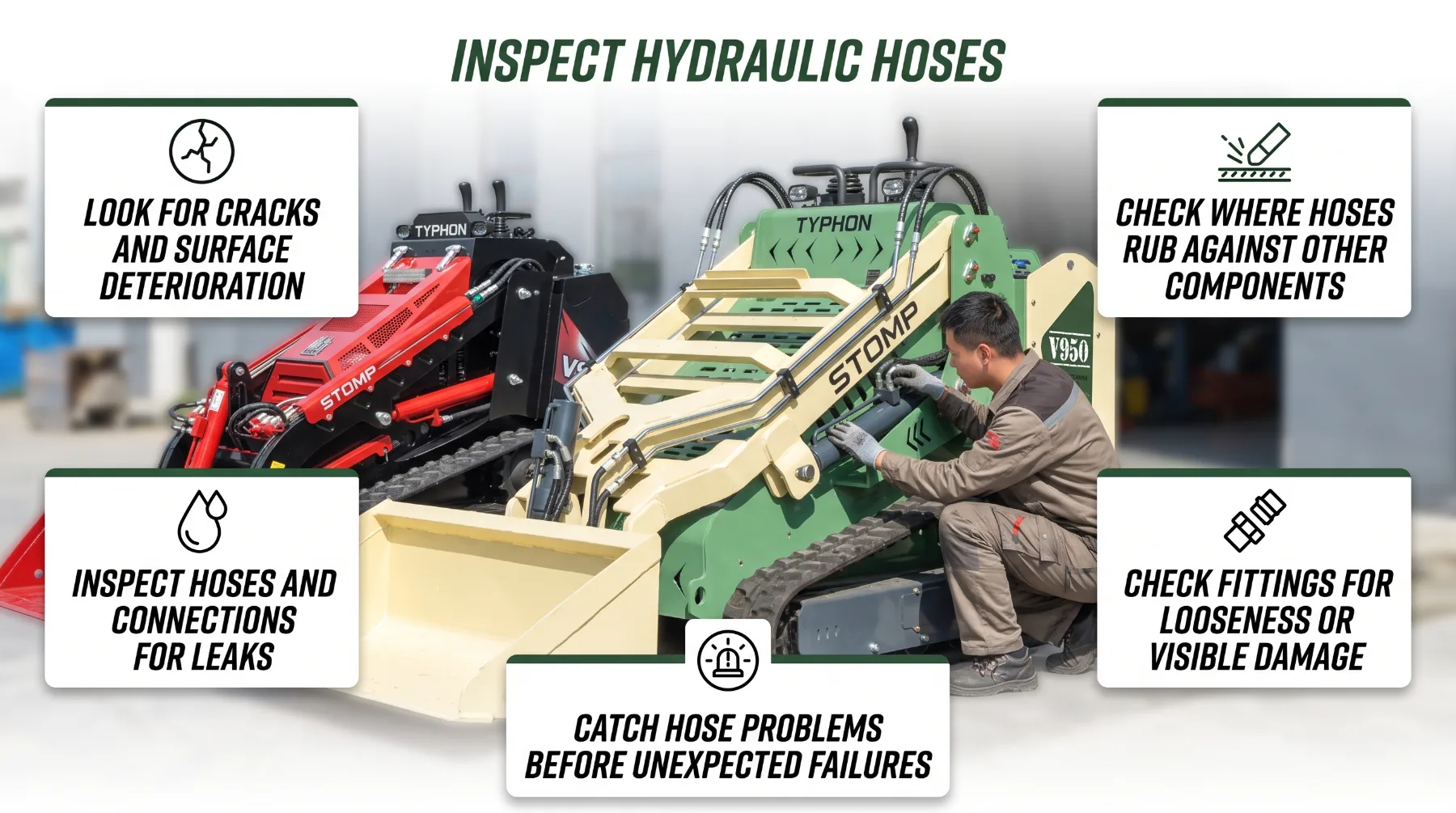
Hydraulic hoses carry pressurized fluid, so their condition directly affects machine performance and operator safety. Inspect hoses and fittings for cracks, abrasion, leaks, or damage, especially around sharp bends and areas where hoses may rub against other components.
Any signs of hydraulic damage should be addressed according to the manufacturer’s service procedures. Finding a worn or damaged hose during a routine inspection can help prevent performance problems and unexpected failures during operation.
Cracks & Wear: Look for cracks, surface damage, or signs of deterioration.
Abrasion Points: Check areas where hoses rub against other machine components.
Leaks: Inspect hoses and connections for signs of hydraulic fluid leakage.
Fittings: Check fittings and connections for looseness or visible damage.
Early Detection: Addressing hose problems during inspection helps prevent unexpected failures during work.
Key takeaway: Hydraulic hoses operate under pressure, so check for cracks, abrasion, leaks, and damaged fittings, and address any leak using the manufacturer’s service procedures.
6. Grease Required Pivot Points
A skid steer has plenty of moving joints, and they need lubrication to keep working smoothly. Pins, bushings, lift-arm joints, and other moving points may all require regular greasing. Without it, friction increases, wear accelerates, and joints that should move freely start to bind.
Grease these points according to the specified schedule, using the correct lubricant for your machine and following its lubrication chart. That chart tells you which points need attention and how often, so nothing gets missed. Regular, proper lubrication is one of the most direct ways to reduce wear and extend the life of these components.
Key takeaway: Pins, bushings, and lift-arm joints need regular greasing, so follow the machine’s lubrication chart and schedule using the correct lubricant to reduce friction and wear.
7. Examine the Attachment
The attachment is where the skid steer meets the work, so it deserves a careful look before you start. Whether you’re running a bucket, forks, grapple, trencher, or another tool, check it for cracks, loose hardware, worn cutting edges, and damaged connection points. Problems here affect both how well the tool works and how safely.
The connection points matter most from a safety standpoint. A secure attachment is essential, since a tool that isn’t properly connected or has damaged mounting components can come loose during operation. Confirming the attachment is sound and securely mounted before work begins protects both the job and everyone around the machine.
Key takeaway: Inspect attachments for cracks, loose hardware, worn edges, and damaged connection points before work, since a secure attachment is essential for safe operation.
8. Maintain the Air Filter
A skid steer working in dust puts heavy demand on its engine air filtration system, and the filter is the barrier keeping that grit out of the engine. Let it clog, and airflow drops and performance suffers; let it fail, and contaminants reach places they shouldn’t. In dusty environments, this is a frequent point of trouble.
Inspect the air filter and the surrounding intake area regularly, especially when working around dust. Replace or service the filter according to manufacturer requirements rather than waiting for a performance problem to force the issue. Staying ahead of it protects the engine and keeps the machine running at full capability.
Key takeaway: Dusty work places heavy demand on the air filter, so inspect it and the intake area regularly and service it per the manufacturer rather than waiting for performance to drop.
9. Check Safety and Operator Controls
Before starting work, confirm that the machine’s operator controls and safety-related systems are working properly. Controls, gauges, warning indicators, restraints, lights, mirrors, and other key components should be checked as part of the pre-operation routine.
Pay attention to anything unusual during these checks. An unexpected warning, gauge reading, or control response can indicate a developing issue, so it should be investigated before normal operation continues.
Control Check: Confirm that operating controls respond correctly.
Safety Systems: Inspect restraints and other safety-related components before use.
Warning Indicators: Check gauges and warning lights for unusual readings or alerts.
Key takeaway: Confirm controls, gauges, warning indicators, seat restraints, lights, and mirrors function before operation, and investigate any unusual warning or control behavior before continuing.
10. Follow the Service Schedule
Daily inspections catch a great deal, but they don’t replace scheduled maintenance. Oil changes, filter replacement, hydraulic service, lubrication, and other tasks all need to happen at the manufacturer’s recommended intervals to keep the machine reliable over the long term. The two work together: daily checks catch the immediate, scheduled service handles the rest.
Keeping maintenance records strengthens the whole effort. A written history helps you track what’s been done, stay on top of upcoming service, and spot recurring issues that point to a deeper problem. Following the schedule and documenting it turns maintenance from a series of one-off tasks into a dependable system.
Key takeaway: Daily inspections don’t replace scheduled service, so follow the manufacturer’s intervals for oil, filters, hydraulics, and lubrication, and keep records to track history and recurring issues.
Conclusion
Skid steer maintenance starts with consistent pre-operation inspections and continues through scheduled servicing of the engine, hydraulic system, cooling system, undercarriage or tires, attachments, and safety components. Engine oil and hydraulic fluid levels should be checked according to the manufacturer’s procedures, while hoses, fittings, cylinders, and connections should be inspected for leaks, abrasion, cracks, or damage. Radiators, cooling screens, air filters, and intake areas require regular cleaning, particularly in dusty environments where restricted airflow can increase thermal load. Tires should be checked for inflation, wear, and damage, while tracks should be inspected for wear, damage, debris buildup, and correct tension where applicable. Pivot points and other lubrication points should be serviced using the specified lubricant and intervals, while attachments should be checked for damage and secure connection. Controls, gauges, warning indicators, lights, mirrors, restraints, and other safety components should also be tested before operation. Following the manufacturer’s service schedule and maintaining accurate inspection records helps identify developing problems early, reduce avoidable downtime, and support reliable skid steer performance throughout demanding work cycles.
Frequently Asked Questions
How often should a skid steer be maintained?Skid steer maintenance follows two schedules. Daily inspections before operation should cover fluid levels, tires or tracks, hydraulic hoses, attachments, cooling areas, controls, and safety components. Scheduled tasks such as oil changes, filter replacement, lubrication, and hydraulic service should follow the manufacturer’s recommended intervals, usually based on machine hours. Dusty or demanding conditions may require more frequent air filter and cooling system service. Keeping maintenance records helps track service intervals and reduce avoidable downtime.
What should I check before operating a skid steer?Start with a pre-shift inspection of fluid levels, leaks, tires or tracks, hydraulic hoses, fittings, and attachments. Check that the attachment is securely connected and clear dust or debris from the radiator and cooling screens. Then test the controls, gauges, warning indicators, seat restraint, lights, mirrors, and other safety components. If anything appears damaged or operates unusually, address it before using the machine.
Why is hydraulic maintenance important?Hydraulic systems power the lift arms, bucket, and many skid steer attachments, so their condition directly affects machine performance. Check fluid level and condition regularly, watching for contamination or signs of degraded fluid. Inspect hoses, fittings, and connections for leaks, cracks, or abrasion because hydraulic systems operate under high pressure. Address leaks and damaged components according to the manufacturer’s procedures to maintain reliable operation and prevent costly downtime.
How does dust affect skid steer maintenance?Dust can quickly load the engine air filter and restrict airflow, reducing engine performance. It can also build up around radiators and cooling screens, limiting airflow and increasing heat. Dust may also contaminate lubrication points and moving components if fittings are not cleaned before greasing. Skid steers working in dusty conditions therefore need more frequent filter checks, cooling-system cleaning, and attention to lubrication and fluid cleanliness.